
Two readings taken minutes apart can differ by ten points. Here is the routine that makes wrist numbers comparable — and the five mistakes that quietly ruin a reading.
Wrist Blood Pressure Readings: Getting Numbers You Can Compare
You take a reading. Ten minutes later you take another, and it's nine points lower. Nothing about your health changed in those ten minutes — so which one is real?
This is the single most common frustration people have with wrist blood pressure devices, and it's also the most fixable. Blood pressure isn't a fixed number; it's a moving one, and it responds to posture, timing, a full bladder and whether you were mid-sentence. The American Heart Association has published a detailed protocol for home blood pressure measurement precisely because of this, and most of it comes down to a few habits.
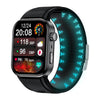
A watch with a real air pump inside — like the FITAOS Max 7 — takes a cuff-style reading on your wrist. That gives you a familiar number, but it doesn't exempt you from technique. Here's how to make your readings mean something.
Why Two Readings Minutes Apart Disagree
Blood pressure moves constantly. It rises when you stand up, when you're cold, when you need the bathroom, when you're annoyed, and for a while after your coffee. A difference of 5–10 points between two readings taken minutes apart is ordinary, and it's not a sign your device is broken.
What is a problem is a reading you can't compare to last Tuesday's. If you took one reading standing in the kitchen and another slumped on the sofa, you're not tracking your blood pressure — you're tracking your furniture. Comparability is the whole goal, and it's mostly about doing the same things every time.
The one-sentence version: a single reading tells you very little. A series of readings taken the same way, at the same times, across a week tells you something.
The Five-Minute Setup
The AHA's home measurement protocol is specific about preparation, and the list is short enough to actually follow:
- Empty your bladder first. A full bladder measurably raises the reading.
- Sit quietly for at least five minutes before you start. Not two. Five.
- No talking, no phone. Conversation and scrolling both nudge the number up.
- Avoid caffeine, food, exercise and smoking for 30 minutes beforehand.
- Sit with your back supported, both feet flat on the floor, legs uncrossed.
That's it. The reason these matter isn't fussiness — it's that each one independently shifts systolic pressure by a few points, and they stack.
Wrist Height Is the Whole Game
If you take one thing from this article, take this: your wrist needs to be level with your heart.
Hydrostatics are unforgiving. If your wrist hangs at your side, the weight of the column of blood between your heart and your wrist adds pressure the device legitimately senses — you can see differences of roughly 10 points purely from arm position. Rest your forearm on a table, or hold your wrist up against your chest. Either works; what doesn't work is letting the arm dangle.
This is worth dwelling on because it's not a quirk of one brand. The 2026 European Society of Hypertension consensus statement on wristwatch-type cuff blood pressure monitors — the first expert review of this specific device category — singled out proper wrist position and user adherence as areas needing further investigation. In other words: the experts reviewing this whole category agree that how you hold your arm is where the real-world accuracy is won or lost.
Practical version: sit at a table, rest your forearm so the watch sits roughly at chest height, press start, and stay still until it deflates. Don't watch the numbers climb — that's a good way to tense up mid-reading.

Morning and Evening: the Schedule Worth Keeping
The AHA protocol recommends a pattern rather than random checks:
- Two readings in the morning, before you take any blood pressure medication.
- Two readings in the evening, before bed.
- Leave at least one minute between the two.
- Keep it up for at least seven days — ideally 28 readings. Three days (12 readings) is the bare minimum.
Why morning-before-medication specifically? Because that's when the number is most informative about how your pressure is behaving without the drug's effect in the way, and it's the same window your clinician is likely reasoning about.
Take Two, Average Them, Do It For Seven Days
Once you have the series, average it. The AHA guidance is to take the mean of all readings across the monitoring period; some guidelines suggest discarding the first day entirely, since day one tends to be the most erratic.
An average of fourteen or twenty-eight readings is a genuinely different object from any single one of those readings. It survives one bad morning. It shows you whether the trend is moving. And it's the thing a clinician can actually use — a graph across three weeks is informative, a lone screenshot of one high number usually isn't.


AIR PUMP · CUFF-STYLE
FITAOS Max 7
$179.99
A real air pump in the case takes a cuff-style oscillometric reading on your wrist. 2.06" AMOLED display, one-press SOS, Bluetooth calling, body composition. Typical battery about 7 days. No subscription, ever.
View Max 7Five Mistakes That Quietly Ruin a Reading
- Measuring right after moving. Walk up a flight of stairs and sit down, and you need those five minutes more than ever.
- Wrist below heart level. The most common cause of a suspiciously high number.
- Talking during inflation. It's thirty to sixty seconds. Stay quiet.
- Talking yourself into it. Watching the digits and bracing for the result raises the reading. Look away.
- Chasing the number. Taking it five times until you like what you see defeats the purpose. Two, one minute apart, recorded.
What Your Wrist Number Is — and Isn't
Two honest caveats, both worth stating plainly.
A wrist reading tends to run higher than an upper-arm cuff. For most people the gap is somewhere around 5–10 mmHg. That doesn't make wrist readings useless — it means your wrist numbers should be compared to your other wrist numbers, not to a clinic's arm cuff. Consistency of method is what makes a series meaningful.
Not all "blood pressure watches" work the same way. Devices with an air pump use the oscillometric method — the same principle as the cuff at your pharmacy. Devices without one estimate pressure from an optical pulse wave, and those sit in a different category entirely: the 2025 AHA/ACC high blood pressure guideline recommended against using cuffless devices for diagnosing or managing high blood pressure until they show better precision in real-world use. That recommendation was aimed at cuffless devices, but it's a good illustration of why the mechanism matters more than the marketing.

AIR PUMP · ECG · SpO2
FITAOS Max 6
$179.99
Same air-pump approach for wrist blood pressure readings, alongside ECG, blood oxygen and blood glucose trend tracking in one watch. No subscription, ever.
View Max 6When to Stop Reading and Call Someone
Home readings are for pattern-spotting, not for emergencies. If a reading is very high and you also have chest pain, severe headache, trouble breathing, vision changes or weakness on one side, don't re-measure — get urgent medical help. No wearable replaces that judgement.
And in the ordinary case: if your averaged readings across a week sit persistently higher than they used to, that's worth a conversation with your clinician. Bring the series, not the single number.
Built for the long run
No subscription fees · Free shipping over $65 · 30-day returns
This article is for general information and is not medical advice. FITAOS devices are wellness products, not medical devices, and are not intended to diagnose, treat, cure or prevent any disease or to diagnose or manage high blood pressure. Always follow your healthcare professional's guidance, and bring your device and readings to your appointments. Sources: American Heart Association, Measurement of Blood Pressure in Humans (Hypertension); ESH Working Group on Blood Pressure Monitoring, consensus statement on wristwatch-type cuff oscillometric monitors (Journal of Hypertension, 2026); AHA scientific statement on cuffless blood pressure devices (Hypertension, 2025).
Tags
Blog Posts
-

, Von Fitaos Team Why Some Blood Pressure Watches Inflate — And What That Actually Means
Why Some Blood Pressure Watches Inflate — And What That Actually Means -

, Von Fitaos Team When Your Parent Lives Alone: Reading Blood Pressure Trends From Afar
When Your Parent Lives Alone: Reading Blood Pressure Trends From Afar -

, Von Fitaos Team Wrist Blood Pressure Readings: Getting Numbers You Can Compare
Wrist Blood Pressure Readings: Getting Numbers You Can Compare


